We want to understand statistics of “random” integer polynomials. How do we choose the polynomials?
There are several ways to order polynomials — by degree, discriminants, heights of the coefficients etc etc.
Here we fix the degree and focus on the ordering by the coefficient heights.
If we take 

1. For instance, what fraction of the polynomials are irreducible?
2. If the coefficients are chosen uniformly from 
3. What is distribution of Galois groups for a random polynomial? In general how do the invariants of the number fields distribute?
Van Der Waerden:
The main ideas is the relation between the height and a measure of complexity called Mahler measure.


We can see that 


It’s easy to see that the multiplicativity property

Different measures of complexity: a) Height


b) Mahler measure
c) Length of 
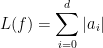
All of these measures are comparable up to factors that only depend on the degree. That is we have



Main ideas of Van Der Waerden :
Van Der Waerden now counts reducible polynomials by counting all possible products 


Using the Mahler measure we have


For each value of 

and hence summing over

So we see that the number of reducible polynomial with a factor of degree 

This quantity is


according to 

Summing over the degrees 

This already show that the fraction of reducible polynomials of degree 


n fact, we see that the probability of the polynomial being reducible is 


Note that for 


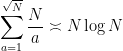
Chela’s improved results: Chela gets more precise estimates on the reducible polynomials. In fact, the number of reducible polynomials of degree 

where 

For

Main ideas: Reduce the counting to polynomials which have a linear factor because rest of them contribute 


For instance 

The cases 

If 

and thus summing over 


Finally 

which by rescaling by

Putting all these together we get the count

(Added Later) Rivin’s idea: To capture reducibility in terms of algebraic relations on the coefficients and then counting points on the corresponding variety.
For instance if a degree 



![{[-N, N]}](https://s0.wp.com/latex.php?latex=%7B%5B-N%2C+N%5D%7D&bg=ffffff&fg=000000&s=0&c=20201002)


Remarks:
1. What about other models of ordering the polynomials?
2. What happens if we change how we pick the coefficients? In the case of where each coefficient is picked uniformly from a small set like say 
Resources:
Van der Waerden, B. L. Die Seltenheit der reduziblen Gleichungen und der Gleichungen mit Affekt. Monatsh. Math. Phys., 43(1):133?147, 1936
Mahler, K. An Application of Jensen?s Formula to Polynomials. Mathematika, vol. 7, no. 2, 1960, pp. 98?100., doi:10.1112/S0025579300001637.
Chela, R. Reducible polynomials. J. Lond. Math. Soc. 38 (1963), 183?188.
Rivin, I. Galois Groups of Generic Polynomials.
 A Neighbourhood Of Infinity